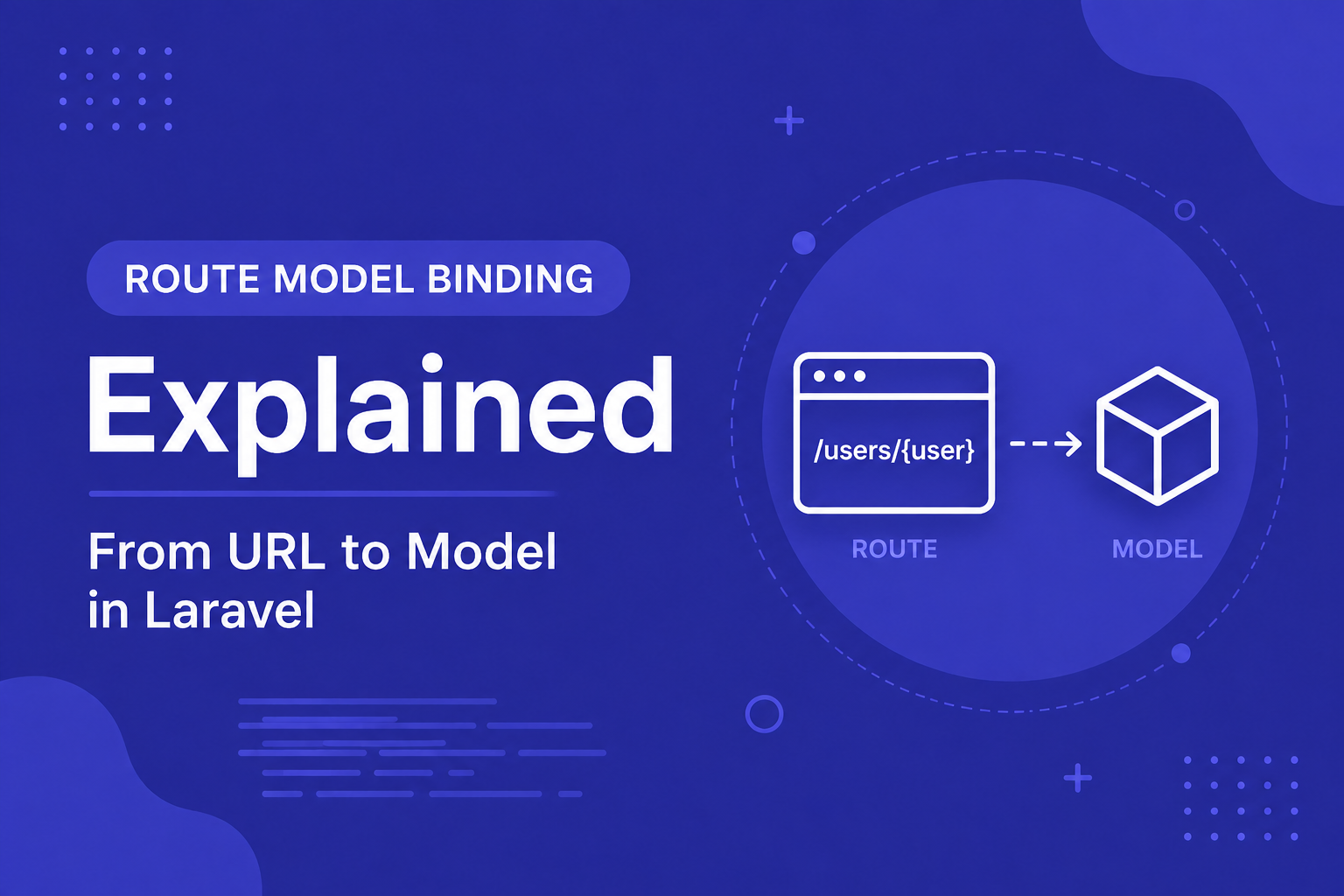
Route Model Binding Explained
In this final article of our Routing & Controllers, we'll explain how route model binding works, the difference between implicit and explicit binding, and how to customize it for more advanced use cases.

7 articles in this category — All Articles
In this final article of our Routing & Controllers, we'll explain how route model binding works, the difference between implicit and explicit binding, and how to customize it for more advanced use cases.
In this article, we'll explain how middleware fits into Laravel's request lifecycle, walk through some commonly used built-in middleware, and show you how to build a custom middleware of your own from scratch.
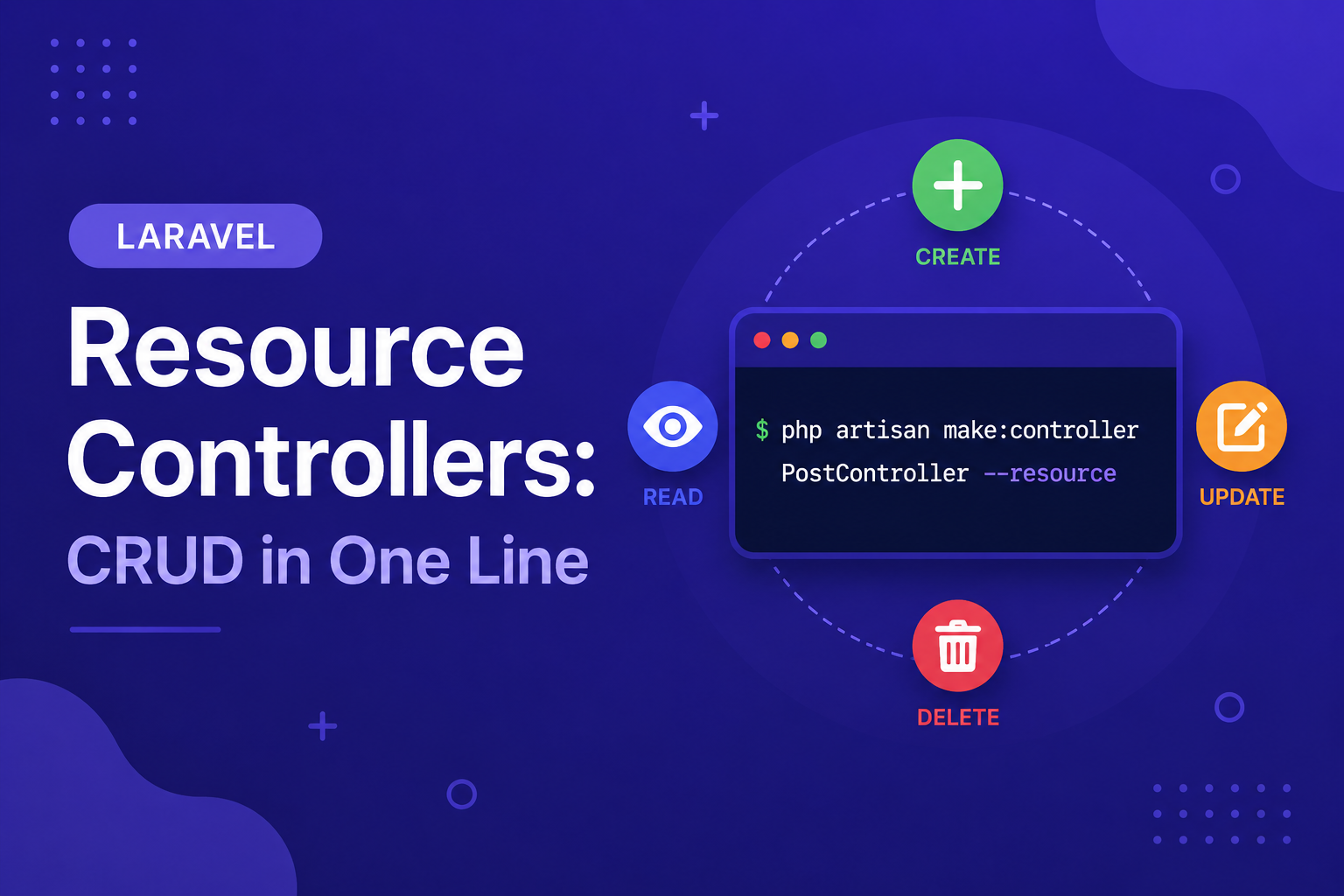
In this article, we'll walk through what resource controllers are, how to generate one, and how the seven standard CRUD methods map to their corresponding routes.
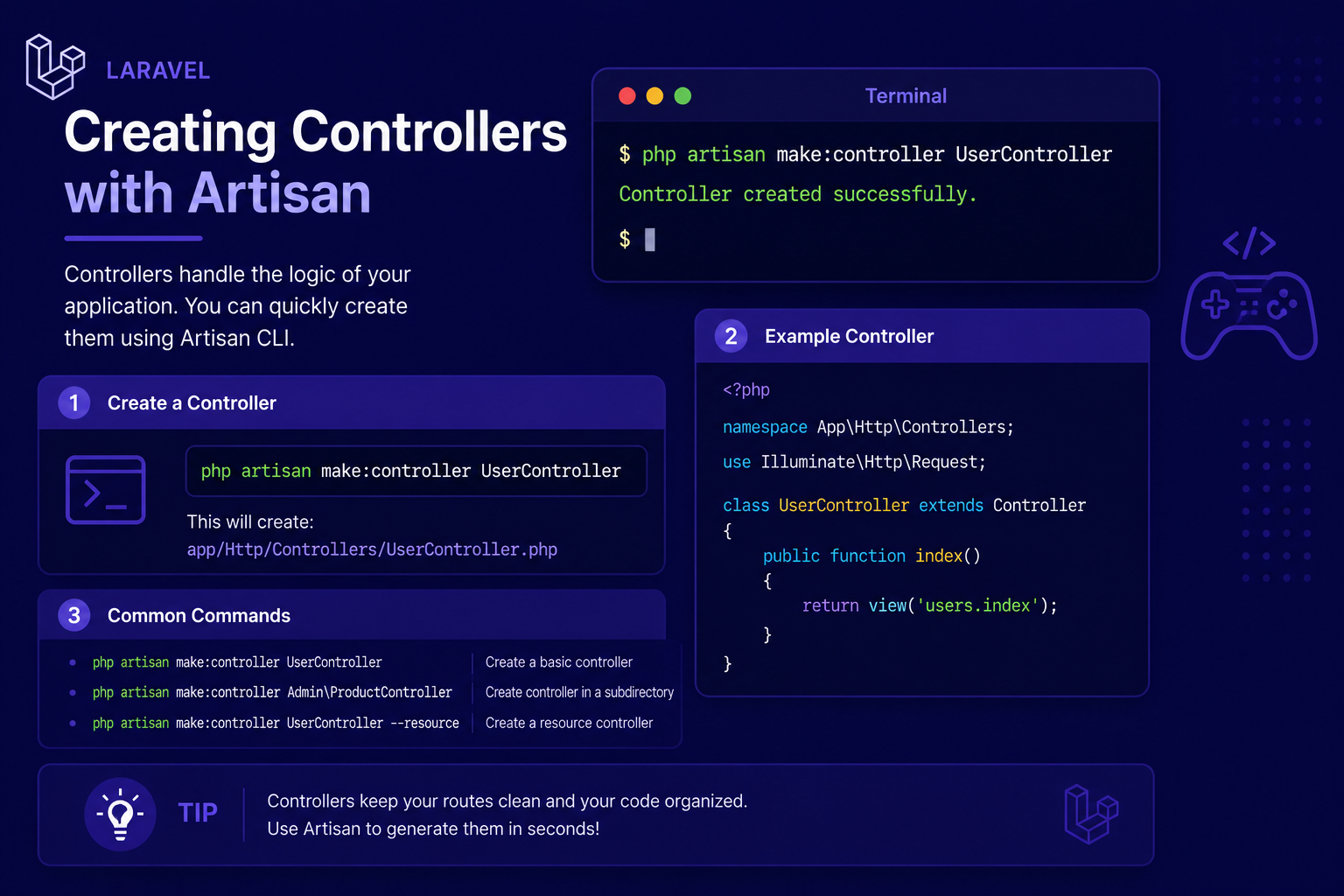
In this article, we'll walk through how to create controllers using Artisan, the different types of controllers Laravel supports, and how to properly connect them to your routes.
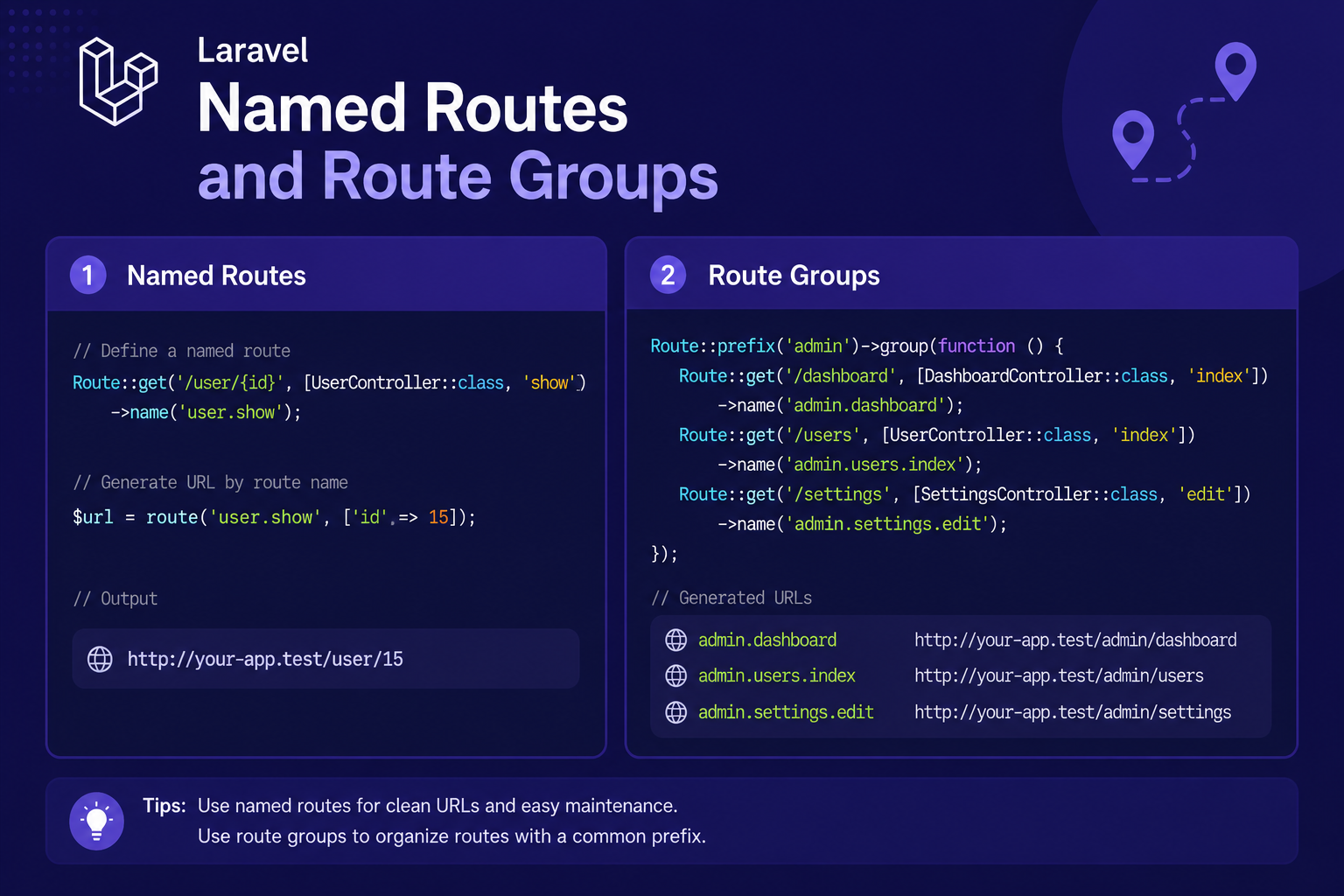
In this article, we'll explore both features in depth, showing how they work individually and how they're often combined together in real-world Laravel applications.
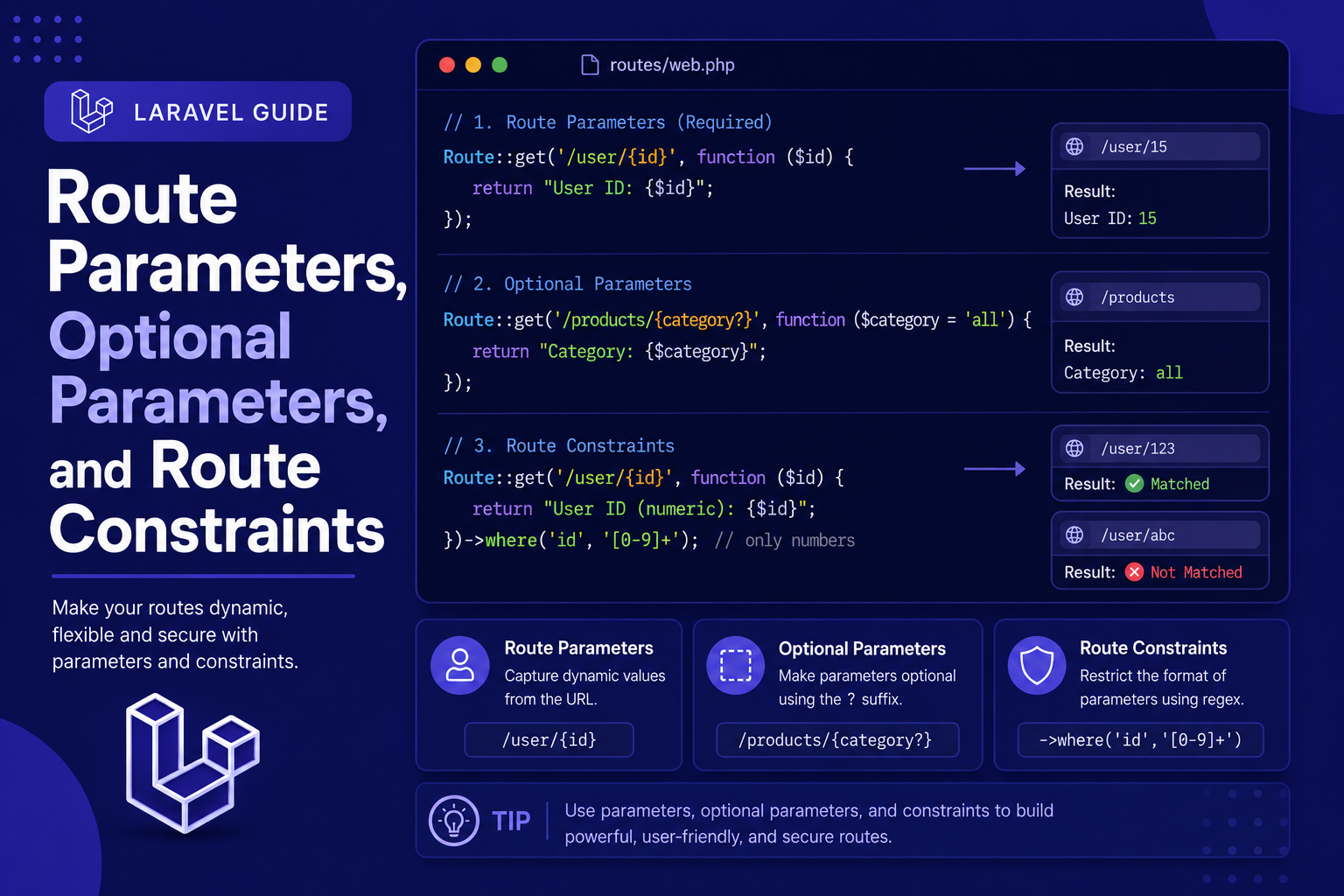
In this article, we'll walk through how to define route parameters, how to make them optional with sensible defaults, and how to apply constraints so your routes only match the input format you intend.
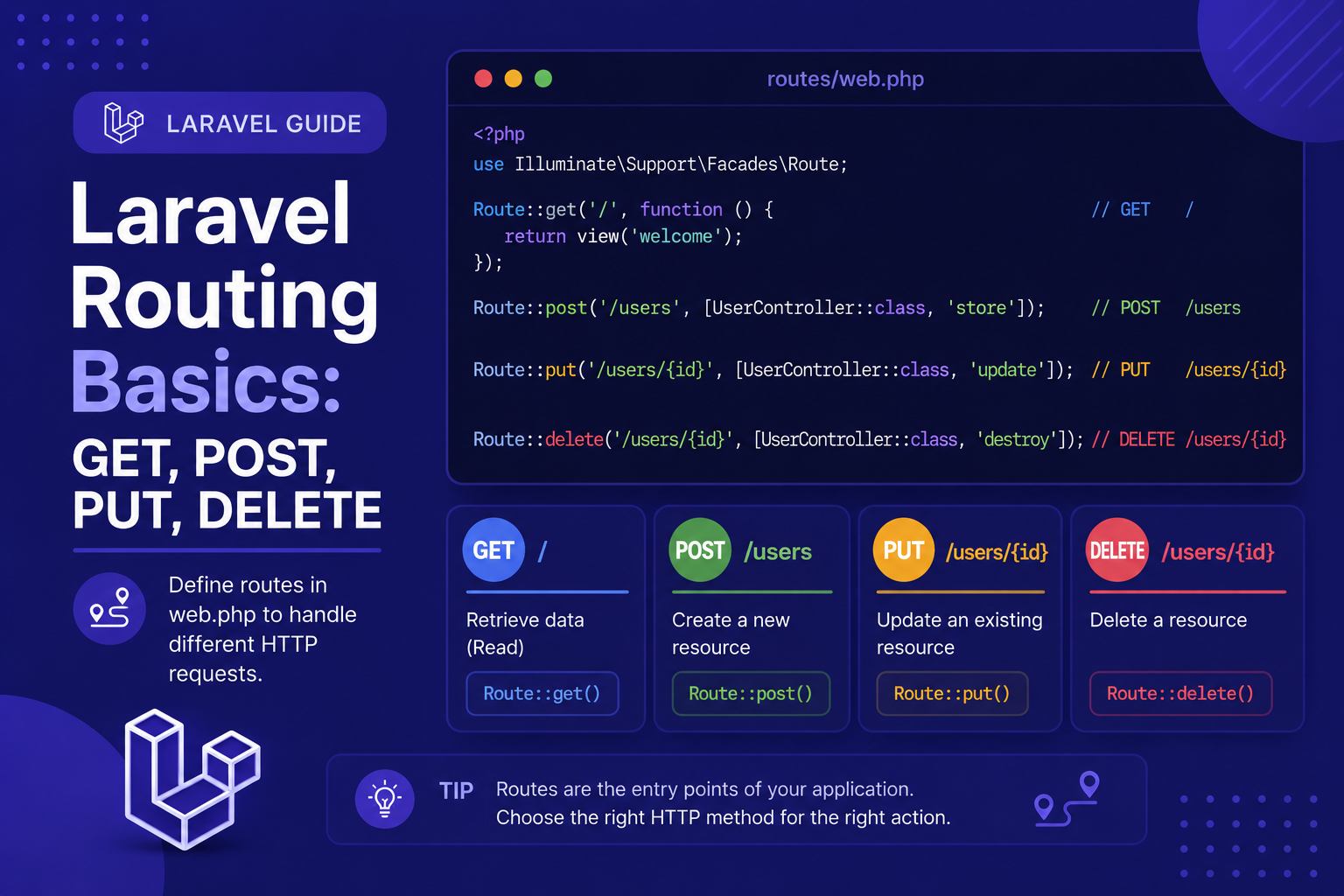
If you've followed along with the earlier articles in this series, you've already seen a glimpse of routing when we peeked into routes/web.php. Now it's time to go deeper and actually understand how Laravel's routing system works, why HTTP methods matter, and how to start structuring your application's URLs properly.